


- Home
- Vertical

- Products
- Company
- Support


Financing New Equipment vs. Clinic Renovation—How a Doctor Loan Helps You Choose
Published:
03rd November, 2025
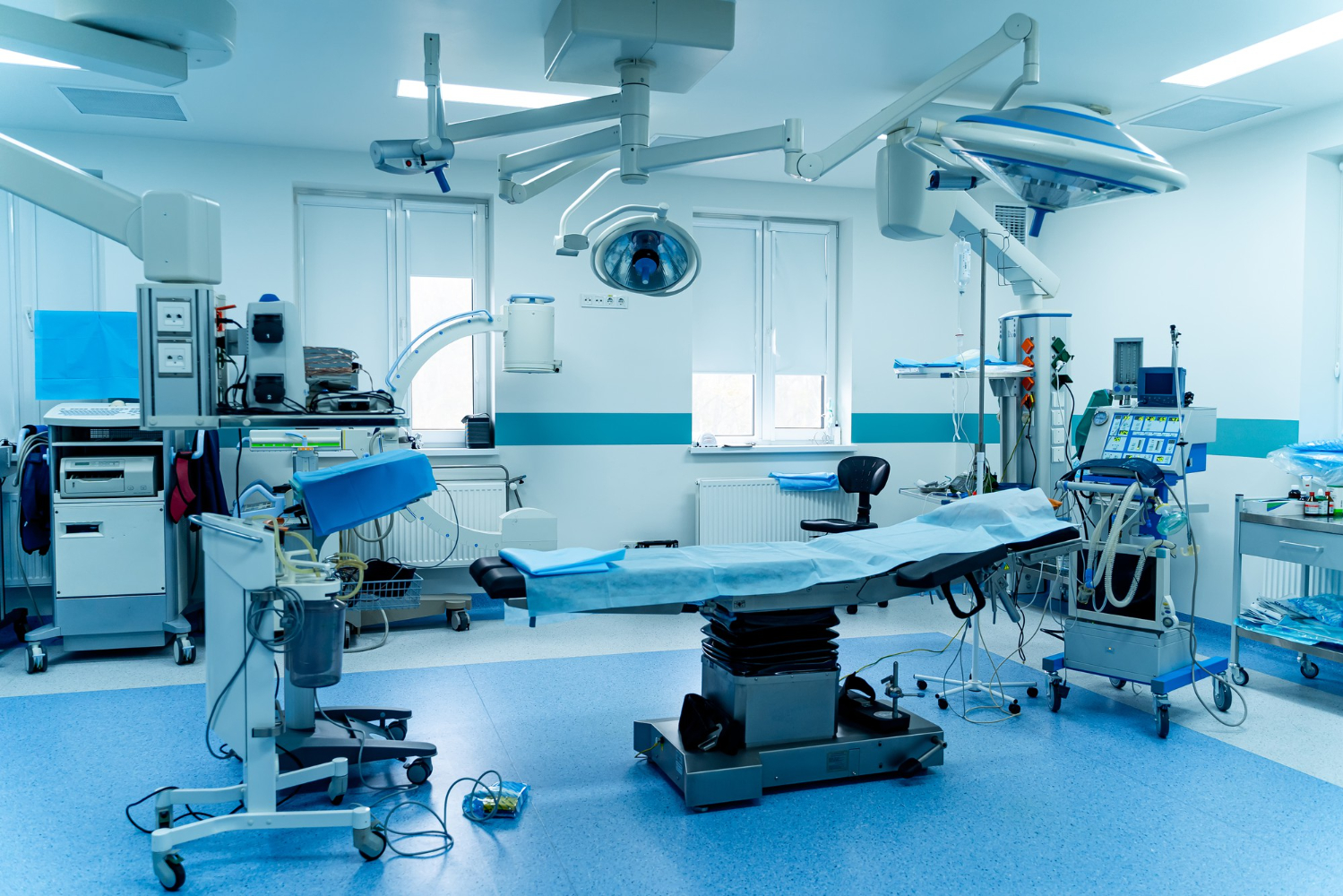
For every medical professional running a private practice, clinic, or diagnostic center, the question of investment is constant: Where should I put my money to generate the best return? Should you upgrade to the latest diagnostic machine, or should you renovate your waiting room to offer a more premium patient experience?
Both equipment and renovation are critical for growth, but they serve very different purposes. New equipment improves clinical outcomes and efficiency, while renovation enhances the patient experience and your brand perception. Making the wrong choice can slow your growth or strain your finances.
A specialized loan product, often referred to as a Doctor Loan (which aligns with our Business Loan offerings designed for professionals), is the financial tool that helps you make this strategic decision. It provides the necessary capital, but the ultimate success depends on how wisely you allocate those funds.
This comprehensive guide will help you decode this critical investment dilemma. We’ll break down the financial logic, the patient impact, and the long-term strategic value of each option, empowering you to choose the path that best fuels your practice’s sustainable success.
Part 1: Understanding the Two Investment Paths
Before you can choose, you must clearly define what each investment achieves for your practice. They represent two fundamentally different forms of business growth: Internal Efficiency and External Perception.
Path A: Investing in New Medical Equipment (The Efficiency Path)
This path is about upgrading your core clinical capability. New equipment is a revenue-generating asset that improves the quality and speed of your services.
- The Goal: To improve diagnostic accuracy, reduce procedure time, expand service offerings (e.g., adding a new specialty), and increase patient throughput.
- The ROI: Direct and measurable. Example: Replacing an old X-ray machine with a new digital one increases the speed of patient diagnosis, allowing you to see 20% more patients per day, directly increasing revenue.
- The Financial Tool: A standard Business Loan is often used here. The equipment itself can sometimes serve as implicit collateral or at least justify the loan, as it is a tangible, income-generating asset.
Path B: Investing in Clinic Renovation (The Perception Path)
This path is about improving the physical space. Renovation impacts the patient’s comfort, perception of your professionalism, and overall experience, which drives word-of-mouth referrals.
- The Goal: To create a welcoming, professional, and hygienic environment; to optimize patient flow; and to reduce patient wait times and anxiety.
- The ROI: Indirect but powerful. Example: Upgrading the waiting area with comfortable seating and a digital token system reduces patient stress, leading to higher patient satisfaction scores and better online reviews, which then attracts new clients.
- The Financial Tool: This investment is often seen as a capital expenditure on real estate. If the cost is very high (e.g., building an entirely new wing), leveraging a secured loan like a Loan Against Property against an existing personal or commercial asset may be the most cost-effective way to fund the project.
Part 2: The Core Strategic Trade-Offs
Choosing between equipment and renovation requires a strategic trade-off analysis based on your current practice status and long-term vision.
Factor
Equipment Investment
Renovation Investment
Direct Revenue Impact
High and immediate. Directly ties to billable services and patient volume.
Indirect. Impacts retention and referrals, which slowly increase revenue.
Depreciation
High. Technology rapidly becomes outdated (obsolescence risk).
Low. Real estate improvements usually appreciate or hold value well.
Skill Requirement
Requires upskilling staff (training costs) to operate the new machine.
Requires minimal upskilling; focuses on logistics and aesthetics.
Loan Justification
Easier. The lender sees a clear link between the asset and income generation.
More challenging. Requires proving the link between patient satisfaction and revenue.
Best Suited When…
You have a long waitlist, and your current equipment is old or inefficient.
Your patient reviews complain about wait times or the clinic’s outdated look.
The Deciding Factor: Your Current Bottleneck
The wisest investment targets the biggest constraint in your practice.
- If the bottleneck is clinical: (e.g., “I have to send patients to an outside lab,” or “My machine breaks down often”), then **Equipment is the priority.** Your current limiting factor is efficiency.
- If the bottleneck is experiential: (e.g., “Patients often leave due to long waits,” or “My clinic looks outdated compared to new competitors”), then **Renovation is the priority.** Your current limiting factor is perception and retention.
Part 3: Financing Options and Their Best Fit
The type of loan you choose must match the lifespan and nature of the investment. Using a short-term, high-interest loan for a long-term asset is a mistake.
Loan Type
Best for Equipment
Best for Renovation
Business Loan
Perfect. Provides collateral-free capital for assets up to a high limit. Repayment tenure can align with the equipment’s useful life.
Good for Mid-Scale. Ideal for minor upgrades like furniture, digital signage, or AC installation (mid-range capital needs).
Small Business Loan
Perfect. Quick, small capital infusion for tools, smaller diagnostic kits, or essential initial purchases.
Good for Minor Upgrades. Ideal for repainting, adding comfortable seating, or technology (WiFi, token system).
Loan Against Property
Good. If the equipment cost is extremely high (e.g., an MRI or CT scanner, requiring several crores).
Ideal for Major Renovation/Expansion. Best for constructing a new floor, building a second clinic, or major civil works due to its low-interest rate and high-value funding.
Part 4: Strategic Allocation of a ₹50 Lakh Loan (Scenario Analysis)
Let’s assume you’ve secured a substantial loan of ₹50 Lakhs. Here’s how a strategic doctor might allocate it based on their specialty and current needs:
Scenario A: The Specialized Surgeon
The Need: The surgeon has a high demand for procedures but needs a faster, less invasive tool. Their current facility is fine.
- ₹40 Lakhs: Invest in a new, minimally invasive surgical equipment system. (High revenue impact, high efficiency).
- ₹5 Lakhs: Staff training to operate the new equipment. (Mandatory for ROI).
- ₹5 Lakhs: Small marketing campaign to promote the new “minimally invasive” service.
Justification: The highest ROI comes from increasing billable procedures and reducing patient recovery time. The renovation is deferred until a later stage.
Scenario B: The Busy Pediatrician
The Need: The pediatrician has high patient volume, but the waiting room is chaotic and parents complain about the environment. Clinical tools are adequate.
- ₹30 Lakhs: Full renovation of the patient reception and waiting area (soundproofing, child-friendly décor, efficient layout).
- ₹10 Lakhs: Technology investment (Centralized Electronic Health Records [EHR] and an appointment/token system).
- ₹5 Lakhs: Minor, essential equipment update (e.g., a better vital signs monitor).
- ₹5 Lakhs: Staff training on patient communication and new digital system.
Justification: The highest ROI comes from improving patient retention and reducing the administrative burden. The investment focuses on the patient journey, which is paramount in pediatric care.
Part 5: The Financial Perspective: Interest and Depreciation
When deciding, always consider the financial life of the asset vs. the repayment schedule of your loan.
1. The Depreciation Challenge of Equipment
Technology changes rapidly. A machine purchased today might be outdated in five years. You must ensure your loan tenure is shorter than the asset’s useful life.
Rule of Thumb: If a machine has a lifespan of 7 years, take a loan of 5 years. This ensures you pay off the debt while the asset is still highly productive and before you need to replace it. Taking a 10-year loan for a 5-year machine is a fundamental financial mistake.
2. Renovation and Appreciation
Renovations (especially structural ones) become part of the property and can often increase its value. Since property generally appreciates in India, renovation is considered a more financially stable investment than machinery. If you use a secured loan like a Loan Against Property for renovation, the asset’s value may rise even as you pay down the debt, providing a double benefit.
3. Using a Top-Up Strategically
If you are an existing customer, Credit Saison India may offer a Top-up Loan on your current facility. This is an agile way to fund a secondary project.
Strategy: Fund the essential equipment purchase with the main Business Loan. Six months later, once the new equipment is generating higher revenue, use a Top-up Loan to fund the renovation of a single waiting room. This allows you to phase your projects and fund the second stage with verified, increased revenue.
Part 6: Patient-Centric Growth: Combining Efficiency and Experience
The most successful practices realize that both efficiency (equipment) and experience (renovation) are important. The true art of scaling is finding the right balance.
1. The Integrated Digital Investment
Many investments blur the line between equipment and renovation. For example, installing a centralized Electronic Health Records (EHR) system.
EHR’s Dual Role: It’s equipment (software/hardware) that improves efficiency (faster patient charting), and it’s a renovation that improves experience (reduces patient paperwork and wait time). Investing in systems that improve both aspects, such as the digital tools supported by a Small Business Loan, offers the highest combined ROI.
2. Transparency and Trust
A patient’s perception of value is everything.
- Renovation: A clean, modern clinic visually communicates professionalism and attention to detail.
- Equipment: Visible, modern equipment communicates expertise and capability. Always inform patients when you invest in new technology to highlight the value you are providing.
Part 7: Your Financial Partner in Healthcare Growth
Making a choice of this magnitude requires a partner who understands the unique capital needs of the healthcare sector. At Credit Saison India, our focus is on providing flexible, fast, and strategic funding for professionals.
Whether you decide that the immediate need is to boost your clinical capability with a large Business Loan for a diagnostic machine, or to make a long-term investment in your brand identity with a Loan Against Property for an expansion, we offer the tailored financing solutions to support your vision. Our goal is to ensure that your financial structure promotes growth, allowing you to focus on what matters most: providing excellent patient care.
Conclusion
The dilemma of financing new equipment versus clinic renovation is not a simple “either/or” question; it’s a strategic calculation.
- Choose Equipment when your biggest barrier to growth is clinical capacity or efficiency (you have the patients, but can’t serve them fast or well enough).
- Choose Renovation when your biggest barrier is patient retention or brand perception (your clinical quality is high, but patients are being driven away by the environment).
By analyzing your practice’s current bottleneck, matching the investment to the right loan product, and always prioritizing assets that generate revenue, you can leverage your professional loan to ensure your practice’s growth is both high-quality and financially sound.
For every medical professional running a private practice, clinic, or diagnostic center, the question of investment is constant: Where should I put my money to generate the best return? Should you upgrade to the latest diagnostic machine, or should you renovate your waiting room to offer a more premium patient experience?
Both equipment and renovation are critical for growth, but they serve very different purposes. New equipment improves clinical outcomes and efficiency, while renovation enhances the patient experience and your brand perception. Making the wrong choice can slow your growth or strain your finances.
A specialized loan product, often referred to as a Doctor Loan (which aligns with our Business Loan offerings designed for professionals), is the financial tool that helps you make this strategic decision. It provides the necessary capital, but the ultimate success depends on how wisely you allocate those funds.
This comprehensive guide will help you decode this critical investment dilemma. We’ll break down the financial logic, the patient impact, and the long-term strategic value of each option, empowering you to choose the path that best fuels your practice’s sustainable success.
Before you can choose, you must clearly define what each investment achieves for your practice. They represent two fundamentally different forms of business growth: Internal Efficiency and External Perception.
Path A: Investing in New Medical Equipment (The Efficiency Path)
This path is about upgrading your core clinical capability. New equipment is a revenue-generating asset that improves the quality and speed of your services.
- The Goal: To improve diagnostic accuracy, reduce procedure time, expand service offerings (e.g., adding a new specialty), and increase patient throughput.
- The ROI: Direct and measurable. Example: Replacing an old X-ray machine with a new digital one increases the speed of patient diagnosis, allowing you to see 20% more patients per day, directly increasing revenue.
- The Financial Tool: A standard Business Loan is often used here. The equipment itself can sometimes serve as implicit collateral or at least justify the loan, as it is a tangible, income-generating asset.
Path B: Investing in Clinic Renovation (The Perception Path)
This path is about improving the physical space. Renovation impacts the patient’s comfort, perception of your professionalism, and overall experience, which drives word-of-mouth referrals.
- The Goal: To create a welcoming, professional, and hygienic environment; to optimize patient flow; and to reduce patient wait times and anxiety.
- The ROI: Indirect but powerful. Example: Upgrading the waiting area with comfortable seating and a digital token system reduces patient stress, leading to higher patient satisfaction scores and better online reviews, which then attracts new clients.
- The Financial Tool: This investment is often seen as a capital expenditure on real estate. If the cost is very high (e.g., building an entirely new wing), leveraging a secured loan like a Loan Against Property against an existing personal or commercial asset may be the most cost-effective way to fund the project.
Choosing between equipment and renovation requires a strategic trade-off analysis based on your current practice status and long-term vision.
| Factor | Equipment Investment | Renovation Investment |
|---|---|---|
| Direct Revenue Impact | High and immediate. Directly ties to billable services and patient volume. | Indirect. Impacts retention and referrals, which slowly increase revenue. |
| Depreciation | High. Technology rapidly becomes outdated (obsolescence risk). | Low. Real estate improvements usually appreciate or hold value well. |
| Skill Requirement | Requires upskilling staff (training costs) to operate the new machine. | Requires minimal upskilling; focuses on logistics and aesthetics. |
| Loan Justification | Easier. The lender sees a clear link between the asset and income generation. | More challenging. Requires proving the link between patient satisfaction and revenue. |
| Best Suited When… | You have a long waitlist, and your current equipment is old or inefficient. | Your patient reviews complain about wait times or the clinic’s outdated look. |
The Deciding Factor: Your Current Bottleneck
The wisest investment targets the biggest constraint in your practice.
- If the bottleneck is clinical: (e.g., “I have to send patients to an outside lab,” or “My machine breaks down often”), then **Equipment is the priority.** Your current limiting factor is efficiency.
- If the bottleneck is experiential: (e.g., “Patients often leave due to long waits,” or “My clinic looks outdated compared to new competitors”), then **Renovation is the priority.** Your current limiting factor is perception and retention.
The type of loan you choose must match the lifespan and nature of the investment. Using a short-term, high-interest loan for a long-term asset is a mistake.
| Loan Type | Best for Equipment | Best for Renovation |
|---|---|---|
| Business Loan | Perfect. Provides collateral-free capital for assets up to a high limit. Repayment tenure can align with the equipment’s useful life. | Good for Mid-Scale. Ideal for minor upgrades like furniture, digital signage, or AC installation (mid-range capital needs). |
| Small Business Loan | Perfect. Quick, small capital infusion for tools, smaller diagnostic kits, or essential initial purchases. | Good for Minor Upgrades. Ideal for repainting, adding comfortable seating, or technology (WiFi, token system). |
| Loan Against Property | Good. If the equipment cost is extremely high (e.g., an MRI or CT scanner, requiring several crores). | Ideal for Major Renovation/Expansion. Best for constructing a new floor, building a second clinic, or major civil works due to its low-interest rate and high-value funding. |
Let’s assume you’ve secured a substantial loan of ₹50 Lakhs. Here’s how a strategic doctor might allocate it based on their specialty and current needs:
Scenario A: The Specialized Surgeon
The Need: The surgeon has a high demand for procedures but needs a faster, less invasive tool. Their current facility is fine.
- ₹40 Lakhs: Invest in a new, minimally invasive surgical equipment system. (High revenue impact, high efficiency).
- ₹5 Lakhs: Staff training to operate the new equipment. (Mandatory for ROI).
- ₹5 Lakhs: Small marketing campaign to promote the new “minimally invasive” service.
Justification: The highest ROI comes from increasing billable procedures and reducing patient recovery time. The renovation is deferred until a later stage.
Scenario B: The Busy Pediatrician
The Need: The pediatrician has high patient volume, but the waiting room is chaotic and parents complain about the environment. Clinical tools are adequate.
- ₹30 Lakhs: Full renovation of the patient reception and waiting area (soundproofing, child-friendly décor, efficient layout).
- ₹10 Lakhs: Technology investment (Centralized Electronic Health Records [EHR] and an appointment/token system).
- ₹5 Lakhs: Minor, essential equipment update (e.g., a better vital signs monitor).
- ₹5 Lakhs: Staff training on patient communication and new digital system.
Justification: The highest ROI comes from improving patient retention and reducing the administrative burden. The investment focuses on the patient journey, which is paramount in pediatric care.
When deciding, always consider the financial life of the asset vs. the repayment schedule of your loan.
1. The Depreciation Challenge of Equipment
Technology changes rapidly. A machine purchased today might be outdated in five years. You must ensure your loan tenure is shorter than the asset’s useful life.
Rule of Thumb: If a machine has a lifespan of 7 years, take a loan of 5 years. This ensures you pay off the debt while the asset is still highly productive and before you need to replace it. Taking a 10-year loan for a 5-year machine is a fundamental financial mistake.
2. Renovation and Appreciation
Renovations (especially structural ones) become part of the property and can often increase its value. Since property generally appreciates in India, renovation is considered a more financially stable investment than machinery. If you use a secured loan like a Loan Against Property for renovation, the asset’s value may rise even as you pay down the debt, providing a double benefit.
3. Using a Top-Up Strategically
If you are an existing customer, Credit Saison India may offer a Top-up Loan on your current facility. This is an agile way to fund a secondary project.
Strategy: Fund the essential equipment purchase with the main Business Loan. Six months later, once the new equipment is generating higher revenue, use a Top-up Loan to fund the renovation of a single waiting room. This allows you to phase your projects and fund the second stage with verified, increased revenue.
The most successful practices realize that both efficiency (equipment) and experience (renovation) are important. The true art of scaling is finding the right balance.
1. The Integrated Digital Investment
Many investments blur the line between equipment and renovation. For example, installing a centralized Electronic Health Records (EHR) system.
EHR’s Dual Role: It’s equipment (software/hardware) that improves efficiency (faster patient charting), and it’s a renovation that improves experience (reduces patient paperwork and wait time). Investing in systems that improve both aspects, such as the digital tools supported by a Small Business Loan, offers the highest combined ROI.
2. Transparency and Trust
A patient’s perception of value is everything.
- Renovation: A clean, modern clinic visually communicates professionalism and attention to detail.
- Equipment: Visible, modern equipment communicates expertise and capability. Always inform patients when you invest in new technology to highlight the value you are providing.
Making a choice of this magnitude requires a partner who understands the unique capital needs of the healthcare sector. At Credit Saison India, our focus is on providing flexible, fast, and strategic funding for professionals.
Whether you decide that the immediate need is to boost your clinical capability with a large Business Loan for a diagnostic machine, or to make a long-term investment in your brand identity with a Loan Against Property for an expansion, we offer the tailored financing solutions to support your vision. Our goal is to ensure that your financial structure promotes growth, allowing you to focus on what matters most: providing excellent patient care.
The dilemma of financing new equipment versus clinic renovation is not a simple “either/or” question; it’s a strategic calculation.
- Choose Equipment when your biggest barrier to growth is clinical capacity or efficiency (you have the patients, but can’t serve them fast or well enough).
- Choose Renovation when your biggest barrier is patient retention or brand perception (your clinical quality is high, but patients are being driven away by the environment).
By analyzing your practice’s current bottleneck, matching the investment to the right loan product, and always prioritizing assets that generate revenue, you can leverage your professional loan to ensure your practice’s growth is both high-quality and financially sound.
Share On :
Popular Blogs

20th September, 2026
MSME Definition and Classification: What Size Business Qualifies for MSME Loan
Discover the MSME definition and classification to find if your business qualifies for an MSME loan. Learn about MSME eligibility and the differences between government and lender criteria.

14th September, 2026
Home Loan Processing Fees: An Essential Guide for Buyers
Discover what home loan processing fees cover, if they're refundable, and how they impact your loan. Trust Credit Saison India for clear upfront lending.
Share On :
Related Blogs

From Clinic to Chain: A Guide for Healthcare Entrepreneurs in India
Ready to grow your clinic into a healthcare chain? This guide covers the key steps, from financial planning and technology to staffing and strategic growth.
03rd October, 2025

Products
Download Credit Saison India App


Follow us on


Credit Saison India is the trade name of Kisetsu Saison Finance (India) Private Limited (CIN: U65999KA2018FTC113783), a non-banking finance company (NBFC) registered with the RBI.
Registered Office Address:
IndiQube Lexington Tower, First Floor, Tavarekere Main Rd, Tavarekere,
S.G. Palya, Bengaluru, Karnataka 560029
- Investors
- Partners
- Insurance Partners
- Collection Agency
- Regulatory
- CS Japan

- Saison International
- © Kisetsu Saison Finance (India) Private Limited 2026.
© Kisetsu Saison Finance (India) Private Limited 2026.