

- Home
- Vertical

- Products
- Company
- Support


Understanding the SVAMITVA Scheme: A New Era of Property Ownership in Rural India
Published:
02nd February, 2026
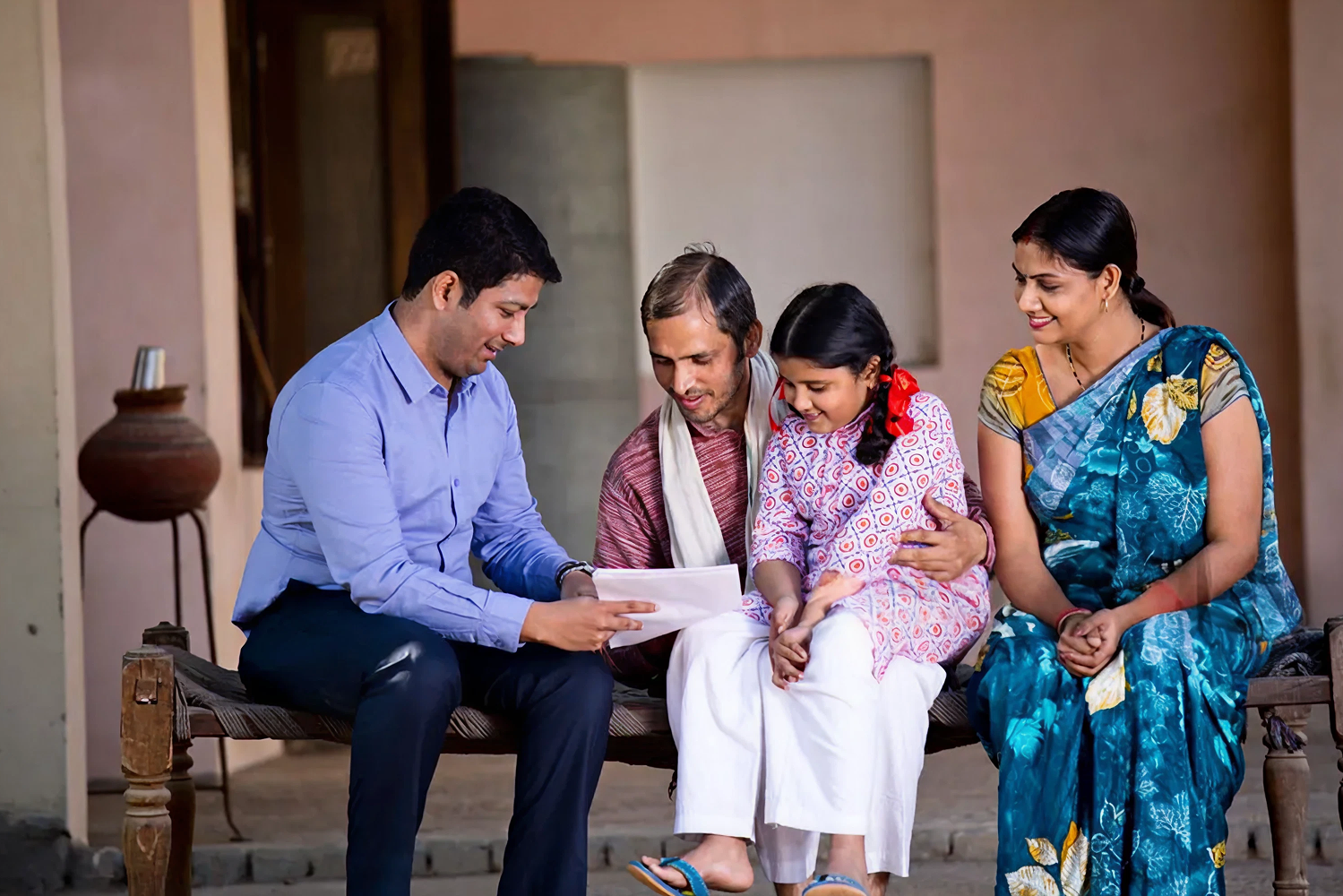
For decades, rural India has faced a significant hurdle: the lack of clear legal documentation for residential properties in villages. While agricultural land records were formalized over time, the inhabited areas—known as “Abadi” land—remained largely unmapped. This left millions of homeowners without a “Record of Rights,” making it nearly impossible to use their homes as collateral for loans or to settle family disputes with legal certainty.
Enter the SVAMITVA Scheme (Survey of Villages and Mapping with Improvised Technology in Village Areas). Launched by the Prime Minister on April 24, 2020 (National Panchayati Raj Day), this ambitious SVAMITVA Yojana is a reformative step toward establishing clear property ownership in rural India. By using high-tech drones and GIS mapping, the government is finally providing rural citizens with the same property rights and financial leverage enjoyed by urban homeowners.
In this comprehensive guide, we will explore the nuances of the SVAMITVA scheme, how it works, and how it is unlocking the economic potential of rural India. Whether you are a villager looking to understand your rights or an entrepreneur interested in rural market growth, this guide covers everything you need to know.
Part 1: What is the SVAMITVA Scheme?
For decades, rural India has faced a significant hurdle: the lack of clear legal documentation for residential properties in villages. While agricultural land records were formalized over time, the inhabited areas—known as “Abadi” land—remained largely unmapped. This left millions of homeowners without a “Record of Rights,” making it nearly impossible to use their homes as collateral for loans or to settle family disputes with legal certainty.
Enter the SVAMITVA Scheme (Survey of Villages and Mapping with Improvised Technology in Village Areas). Launched by the Prime Minister on April 24, 2020 (National Panchayati Raj Day), this ambitious SVAMITVA Yojana is a reformative step toward establishing clear property ownership in rural India. By using high-tech drones and GIS mapping, the government is finally providing rural citizens with the same property rights and financial leverage enjoyed by urban homeowners.
In this comprehensive guide, we will explore the nuances of the SVAMITVA scheme, how it works, and how it is unlocking the economic potential of rural India. Whether you are a villager looking to understand your rights or an entrepreneur interested in rural market growth, this guide covers everything you need to know.
The SVAMITVA Scheme is a Central Sector scheme of the Ministry of Panchayati Raj. The acronym stands for Survey of Villages and Mapping with Improvised Technology in Village Areas. Its primary mission is to provide an integrated property validation solution for rural India.
The Core Objective
Historically, British-era surveys focused on revenue-generating agricultural land, leaving the residential “Abadi” areas as blank spots on the map. The SVAMITVA Yojana aims to:
- Establish Ownership: Provide legal “Property Cards” to village household owners.
- Enable Monetization: Allow villagers to use their property as a financial asset to take bank loans.
- Reduce Disputes: Create accurate land records to minimize property-related legal cases.
- Improve Planning: Provide high-resolution GIS maps to Gram Panchayats for better infrastructure development.
This initiative is a cornerstone of the Atmanirbhar Bharat (Self-Reliant India) vision. Just as a business might use a Loan Against Property to scale operations, the SVAMITVA scheme allows a rural family to leverage their home to fund a Small Business Loan or educational needs.
Part 2: How the SVAMITVA Yojana Works (The Technology)
The “Improvised Technology” in the scheme’s name refers to a sophisticated blend of Drone Surveying and a network of CORS (Continuously Operating Reference Stations).
1. Drone Mapping
The Survey of India, the country’s national mapping agency, deploys survey-grade drones equipped with high-resolution cameras. These drones fly over the village abadi areas, capturing images with centimeter-level accuracy.
2. The CORS Network
To ensure the maps are precise, the government has established a network of CORS stations across India. These stations act as a virtual base, providing real-time corrections to the drone’s GPS data. This ensures that every inch of a property’s boundary is mapped with scientific accuracy (positional accuracy of up to 5 cm).
3. Ground Truthing
Once the drone images are processed into maps, local revenue officials and Gram Panchayat members walk the village streets. They verify the boundaries with the help of the homeowners—a process known as “Chunna Lining” (marking boundaries with white lime powder). This collaborative effort ensures that the digital map reflects the ground reality.
Part 3: The SVAMITVA Property Card: Your New Financial Passport
The most tangible outcome of the SVAMITVA scheme is the Property Card (also called Svamitva Patta or Gharauni in some states). This card is a legal document that proves ownership of a residential plot in a village.
What Does the Property Card Contain?
- Unique Property ID: A specific number linked to the national land database.
- Owner’s Details: Name, photo, and Aadhaar linkage (where permitted).
- Precise Dimensions: The exact area and coordinates of the property.
- QR Code: For instant digital verification by banks or authorities.
The Economic Power of the Card
With this card in hand, a villager can walk into a bank and apply for a loan. Previously, banks were hesitant to provide credit against village homes because there were no clear titles. Now, the property card acts as a valid security, opening doors to credit for home improvements, agricultural tools, or starting a Vyapari Loan funded local shop.
Part 4: Key Benefits for Rural Citizens and Governance
The SVAMITVA Yojana is more than just a mapping exercise; it is a catalyst for social and economic transformation.
1. Financial Inclusion
For the first time, rural property is becoming a “liquid” asset. This ends the reliance on informal money lenders who charge exorbitant interest rates. Access to formal banking through property collateral is a game-changer for rural entrepreneurship.
2. Reduction in Property Disputes
Land disputes are a chronic issue in rural India, often lasting for generations. The high-resolution maps provide an indisputable record of boundaries, drastically reducing the scope for encroachment and conflict.
3. Empowering Gram Panchayats
With accurate maps, Gram Panchayats can:
- Accurately Assess Property Tax: Creating a sustainable source of revenue for the village.
- Plan Better Infrastructure: Deciding where to lay roads, water pipelines, and streetlights with precision.
- Manage Common Land: Identifying and protecting public spaces like ponds and community centers.
Part 5: Progress and Implementation (As of 2026)
As of February 2026, the SVAMITVA Scheme has reached a massive milestone in its nationwide rollout:
- Drone Survey Status: Surveys have been completed in over 95% of the targeted 6.62 lakh villages across India.
- Property Cards Issued: Over 2.42 crore property cards have already been generated, providing legal security to millions of households.
- State Leaders: States like Uttar Pradesh, Madhya Pradesh, Haryana, and Maharashtra have completed their primary mapping and distribution cycles.
Government agencies are now focusing on integrating these records with central financial platforms to ensure seamless access to formal credit through Business Loans.
Part 6: How to Participate and Get Your Property Card
The SVAMITVA process is designed to be government-led and requires minimal individual application. Here is the general flow:
- Notification: Local authorities notify the village before the drone survey begins.
- Boundary Marking: Residents mark their house boundaries using lime powder (Chunna).
- The Survey: Survey of India flies drones to capture high-resolution imagery.
- Verification (Ground Truthing): Officials visit to verify the draft map with residents.
- Objection Period: A 15-30 day window is provided to file and resolve any boundary or ownership disputes.
- Card Distribution: Final property cards are issued physically or can be downloaded via DigiLocker.
Conclusion: A Foundation for a Self-Reliant Rural India
The SVAMITVA Scheme is arguably one of the most significant rural reforms in post-independence India. By giving a “legal identity” to the homes of millions, the government is not just mapping land; it is mapping dreams. It is providing the foundation upon which rural families can build their economic futures.
Clear property titles lead to financial stability, which leads to investment, which eventually leads to prosperity. At Credit Saison India, we celebrate this digital revolution. Just as we use technology to provide fast Business Loans to urban entrepreneurs, the SVAMITVA scheme is ensuring that rural entrepreneurs have the same tools for success. Your home is now your asset—secure it and grow with it.
Share On :
Popular Blogs

20th September, 2026
MSME Definition and Classification: What Size Business Qualifies for MSME Loan
Discover the MSME definition and classification to find if your business qualifies for an MSME loan. Learn about MSME eligibility and the differences between government and lender criteria.

14th September, 2026
Home Loan Processing Fees: An Essential Guide for Buyers
Discover what home loan processing fees cover, if they're refundable, and how they impact your loan. Trust Credit Saison India for clear upfront lending.
Share On :

Products
Download Credit Saison India App


Follow us on


Credit Saison India is the trade name of Kisetsu Saison Finance (India) Private Limited (CIN: U65999KA2018FTC113783), a non-banking finance company (NBFC) registered with the RBI.
Registered Office Address:
IndiQube Lexington Tower, First Floor, Tavarekere Main Rd, Tavarekere,
S.G. Palya, Bengaluru, Karnataka 560029
- Investors
- Partners
- Insurance Partners
- Collection Agency
- Regulatory
- CS Japan

- Saison International
- © Kisetsu Saison Finance (India) Private Limited 2026.
© Kisetsu Saison Finance (India) Private Limited 2026.